General News
29 May, 2026
Transfer stations, community grants to stay under revised council budget
Central Goldfields Shire Council have included the threatened transfer stations and community grants in their recent budget following extensive community feedback.
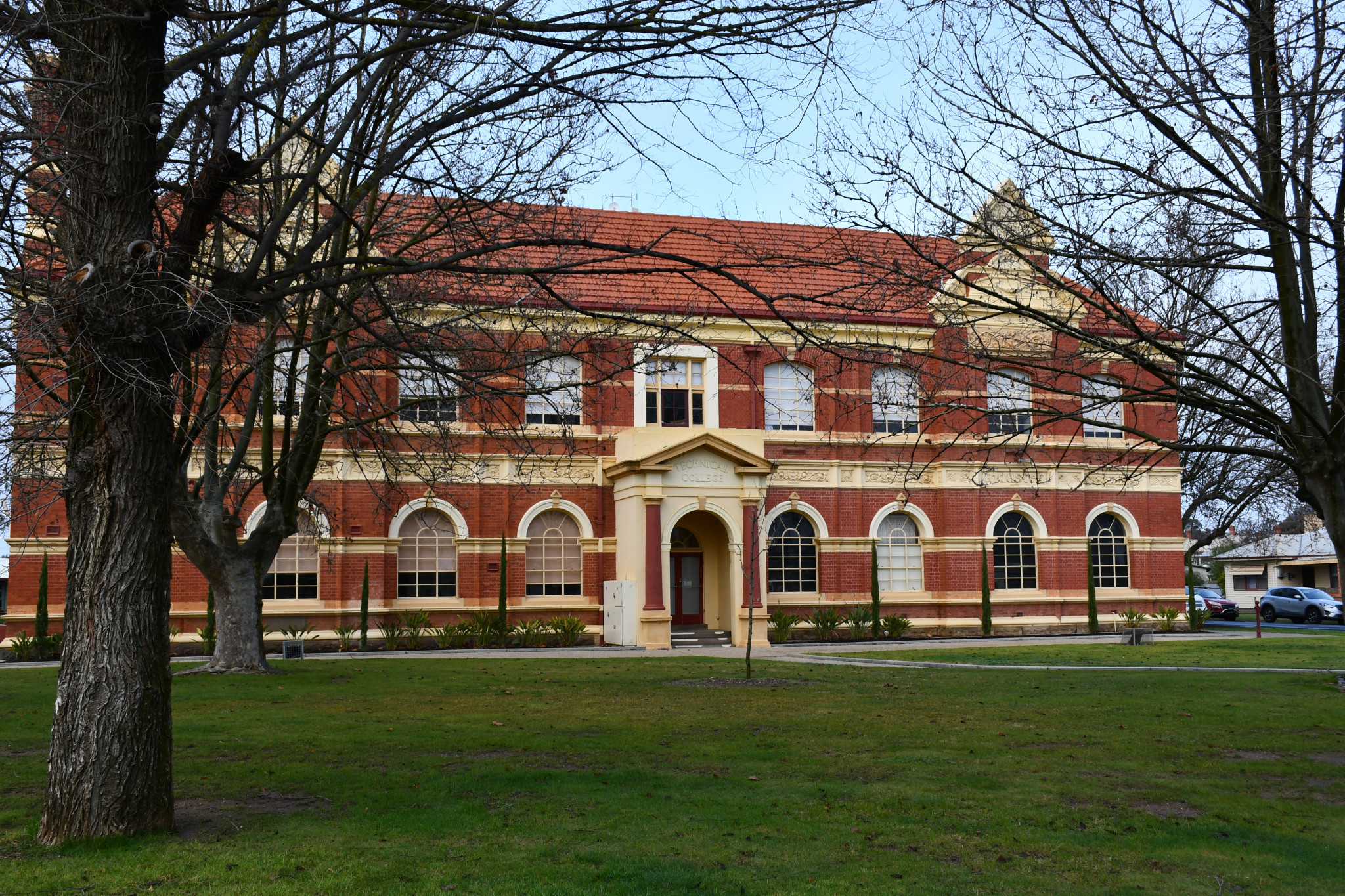
Central Goldfields Shire Council have listened to community feedback by keeping the threatened transfer stations and community grants in their recently adopted budget.
Councillors adopted the $39.22 million budget for 2026/27 at Wednesday night’s council meeting.
It followed extensive community feedback with 40 times more submissions than the previous year.
It’s the first budget in their four-year plan to save $11 million reversing a deficit of $5.5 million recorded in 2023/24.
While this will mean reduced services for ratepayers if the same approach was taken as the previous budget the deficit is expected to grow to $7.2 million by 2028/29.
Instead, this budget reduces the underlying deficit to $3.22 million, identifying a surplus of $2.08 million, toward a sustainable financial position.
However, council’s original proposal to do this controversially included ending the community grants program and closing the Bealiba, Dunolly, and Talbot transfer stations.
This was broadly opposed by the community across 332 submissions and three petitions totalling almost a thousand signatures.
Councillor Grace La Vella joined her colleagues in thanking the community for their input.
“This has without question been one of the most heavily debated and carefully considered pieces of work before council in recent years,” she said.
Councillor Anna de Villiers said the community engagement was “uplifting” to see.
“I found it very encouraging because I found, for the past 15 years maybe, that the community was very lethargic not taking real interest in what was happening around town,” she said.
The result is a budget which keeps the transfer stations open and includes a reduced $30,000 community grants program.
To compensate, council found savings elsewhere in the budget including increasing the waste service management fees by 10 percent for standard services, with varying increases to non-standard charges.
This means a household with standard garbage and recycling will pay $678 annually for the service.
Council have also focused almost all their capital investment into maintaining existing assets and completing ongoing multi-year projects.
“Unless we receive untied government grants, we cannot build new infrastructure until we make sure our existing assets are properly maintained,” the budget read.
As a result, they expect to steadily increase their estimated $6.29 million cash balance ending 2026/27 to $12.32 million by 2029/30.
Other initiatives to improve council’s financial position include reducing labor costs, increasing operational efficiency, selling surplus land, and reviewing all services.
Councillor Gerard Murphy highlighted the around $1.1 million in savings made in staff expenditure.
“Now that’s a big saving that’s half of what we’re saving for the whole year,” he said.
Where they didn’t raise money, however, is through a rate cap exemption.
Although the State Government’s 2.75 percent cap on rate increases has not kept up with rising costs, according to council, they avoided passing that on to the community.
“Keeping the rates at 2.75 [percent] means we cannot afford to do everything we have done in the past, and we appreciate this is a difficult adjustment for our community,” the budget read.
Councillor Geoff Bartlett said cost-shifting from state and federal governments was to blame for funding challenges.
A study by consultants Morrison Low, referenced by Cr Bartlett, estimated cost shifting cost each NSW ratepayer nearly $500.
If applied to the Central Goldfields Shire Cr Bartlett said that would be the equivalent of $4 million per year.
“I’d call that a ratepayer rip-off by the state. We’re being asked to do more with less money,” he said.
“I think it’s incumbent upon ratepayers and Victorians in general to put pressure back on the state to fully fund the services they say we must cover.”
The budget also said council may apply for a rate cap variation in future.
Cr Bartlett said he was against this proposal considering the financial hardship being experienced in the community.
“If we look at that logically there’s no way we could really pass that cost on to ratepayers if we ever looked at doing a rate cap exemption,” he said.
Cr de Villiers thanked the council’s CEO, Peter Harriott, and the council officers for their efforts preparing the budget.
“We as councillors have to rely on the advice that they give us,” she said.
“They know their job and they know what this organisation is about better than any one of us.”
Cr La Vella said the budget wasn’t perfect “and no budget ever is” but balances community expectation with financial reality.
“It reflects careful consideration, robust debate, compromise where required, and ultimately a commitment to putting Central Goldfields Shire on a stronger financial footing while continuing to support our communities,” she said.
Cr Murphy said he got around 90 percent of what he wanted with the tips and community grants specifically mentioned as important.
“If I get nearly what I want I’m okay with it and we’ve got to move on with the budget,” he said.